1. Size of Digital Rupee Ecosystem & Reason for its existence
2. What is Digital Rupee and What makes it Different?
3. Retail e₹: From Zero to Your First Payment
4. Wholesale e₹: The Engine Behind Inter-Bank Markets
5. Demat 2.0: Where Tokenised Bonds Meet Digital Cash
6. Retail vs Wholesale: The Structural Comparison
7. The Digital Rupee: Where Do We Go From Here?
FAQs

Sovereign cash, not crypto: Section 26 of the RBI Act, 1934, makes e₹ legal tender. It is a direct liability of the RBI, and 1 e₹ = ₹1.
Real retail adoption, but uneven: Circulation grew from ₹16 crore (Mar 2023) to ₹1,016 crore (Mar 2025), falling to ₹772 crore (Mar 2026), as incentivised retail usage normalised.
Wholesale e₹ is the banks' settlement system: Banks settle trades of G-Secs, call money, CDs and bonds with T+0 atomic finality.
Demat 2.0 is the breakthrough: The SEBI - RBI pilot launched on 10 September 2026 settled ₹1,025 crore of tokenised corporate bonds in e₹-W.
 Part of a series
Launched on 1 November 2022, the RBI's wholesale CBDC pilot and the retail pilot (launched on 1 December 2022) have been among the largest CBDC experiments in the world, crossing 120 million retail transactions and ₹28,000 crore by December 2025. In September 2026, the RBI took a giant leap with tokenisation of corporate bonds and settlement in e₹-W.
Retail e₹ (e₹-R) in circulation was ₹16 crore as of March 2023. It increased to ₹234 crore and ₹1,016 crore as of March 2024 and 2025, respectively, by which time the pilot included 17 banks and covered approximately 60 lakh users. However, in FY26, the circulation fell roughly 24% to about ₹772 crore, even though during this period the RBI introduced a number of additional central and state direct benefit transfer (DBT) pilots. Wholesale e₹ was at nil as of March 2026, since entities hold e₹-W only for the life of a trade.
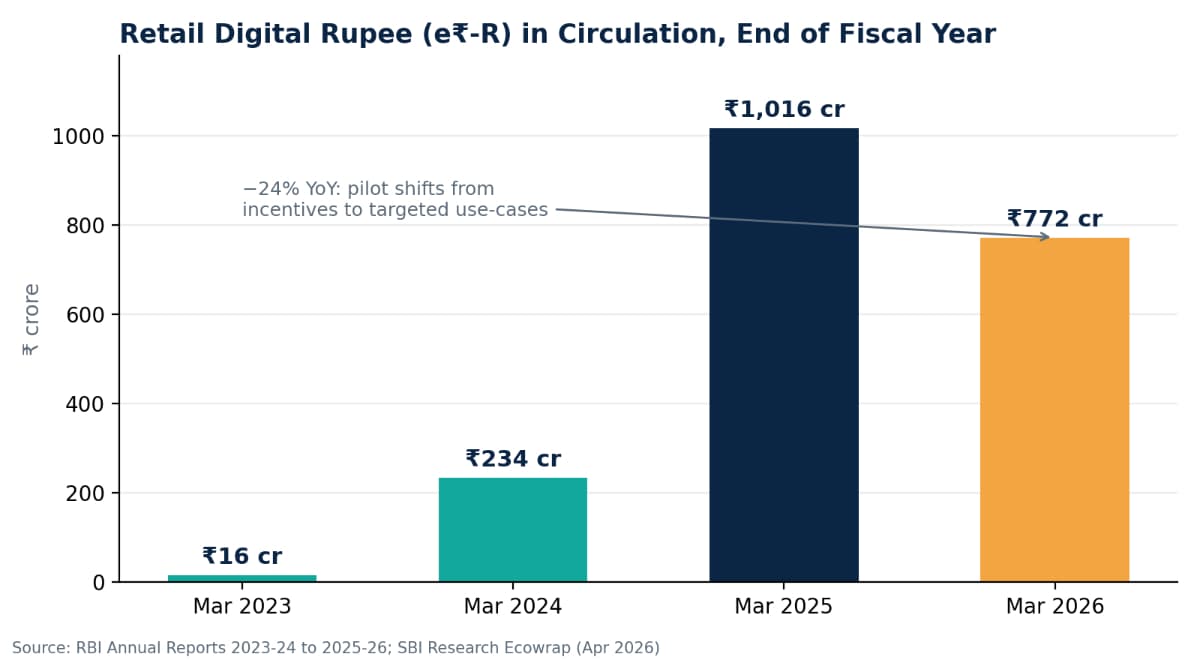
Figure 1: Retail e₹ in circulation (₹ crore), FY23–FY26
At below 0.03% of the total ₹41.6 trillion currency in circulation in India, the e₹ is still a fairly small number. The fall in circulation in FY26 can be more of a reset than a retreat. There were early bank incentives and salary disbursals which created early adoption. The RBI is now prioritising genuine use-cases over headline numbers. The policy logic rests on three pillars: to lower the cost of printing and managing cash, build a sovereign alternative to private stablecoins and crypto, and develop a programmable settlement layer for tokenised financial services.
The e₹ is the digital form of the Indian Rupee bank note. It is guaranteed by the central government and is held on the RBI's balance sheet, not a commercial bank's. Like physical cash, it does not carry a cost in the pilot and also earns no interest. Similar to physical cash, it can be used to make payments up to two decimal places. Like cash, it comes in the same denominations as physical currency.
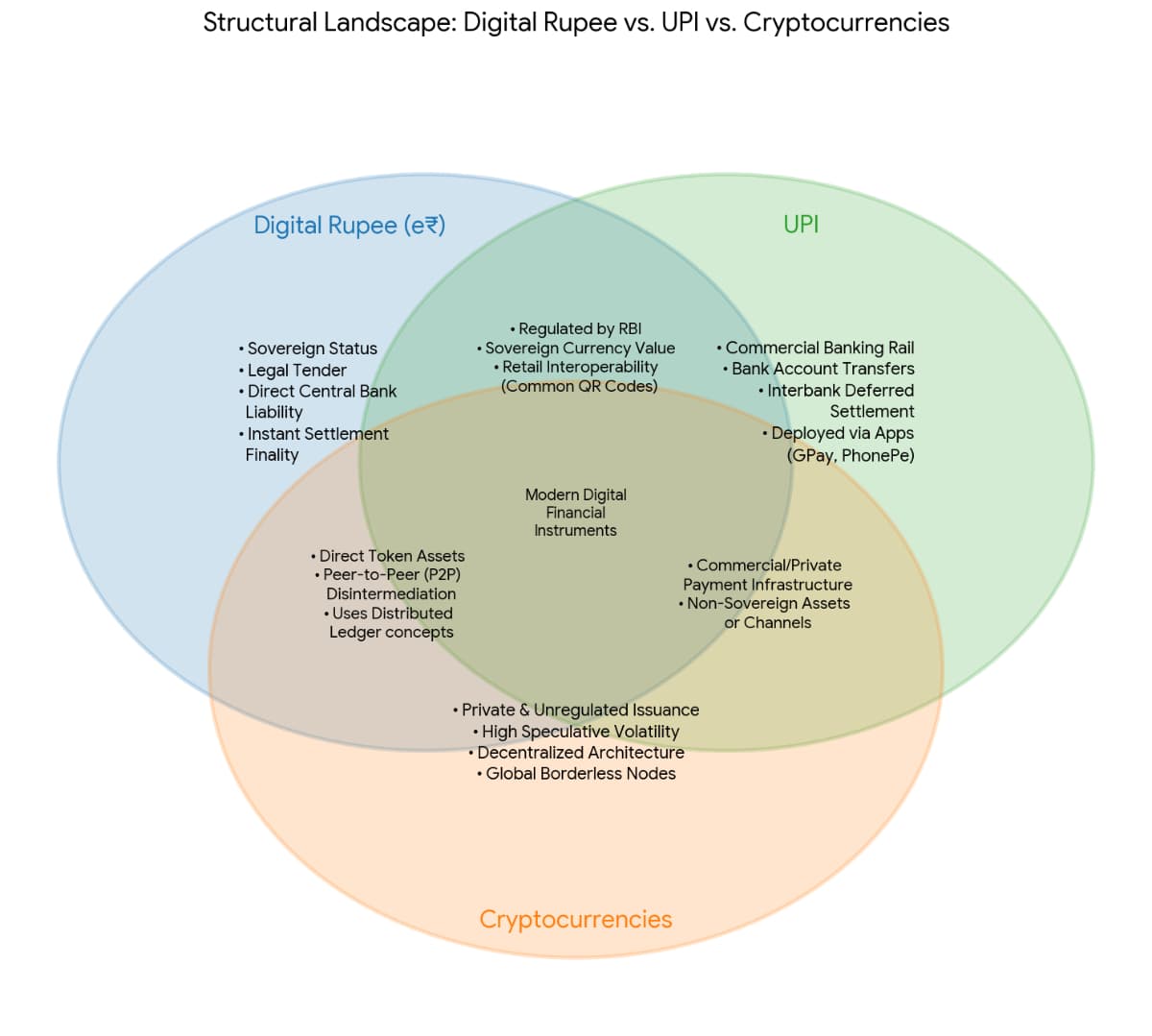
Figure 2: Structural landscape of Digital Rupee, UPI and cryptocurrencies
Table 1: e₹ vs UPI vs Crypto
| Feature | Digital Rupee (e₹) | UPI | Cryptocurrencies |
|---|---|---|---|
| What is it? | Legal tender in token form | A payment rail | Private digital assets |
| Where is money held? | Directly with the RBI | Commercial bank account | Decentralised ledger |
| Passbook impact | Only load/redeem entries | Every transaction listed | N/A |
| Value stability | 1:1 with cash | Stable (moves fiat) | Highly volatile |
| Interest earned | None, like cash | Savings interest | None |
The e₹ is the money. UPI moves commercial bank money.
Step 1: Select a Participating Bank
The app for e₹ is bank-specific, and access to the CBDC is via the participating bank of your choice, linked to your existing account. Select the bank where you keep your primary savings account, and search the App store for '[Bank Name] Digital Rupee' and download the app. Only one e₹ wallet is allowed per bank-registered mobile number.
Table 2: Select banks in the retail e₹ pilot
| Tier 1 Banks (Broad Coverage) | Emerging & Regional Partners |
|---|---|
| State Bank of India (SBI) | Canara Bank |
| ICICI Bank | Federal Bank |
| HDFC Bank | IndusInd Bank |
| Punjab National Bank (PNB) | IDFC First Bank |
Steps 2-6: Onboarding and Transacting
1. Download & verify: Install the app and select the SIM registered with your bank for automated SMS verification.
2. Secure access: Set a device PIN or biometric lock.
3. Register wallet: The app fetches your name and links your account via your mobile number.
4. Load Digital Cash: Tap "Load" and choose notes (₹50, ₹100, ₹500) or coins; your account is debited and tokens appear in the wallet.
5. Transact: Once loaded, you can pay merchants (P2M) by scanning any UPI QR code and pay peers (P2P) by phone number or wallet ID, and redeem the e₹ to your bank account 24/7.
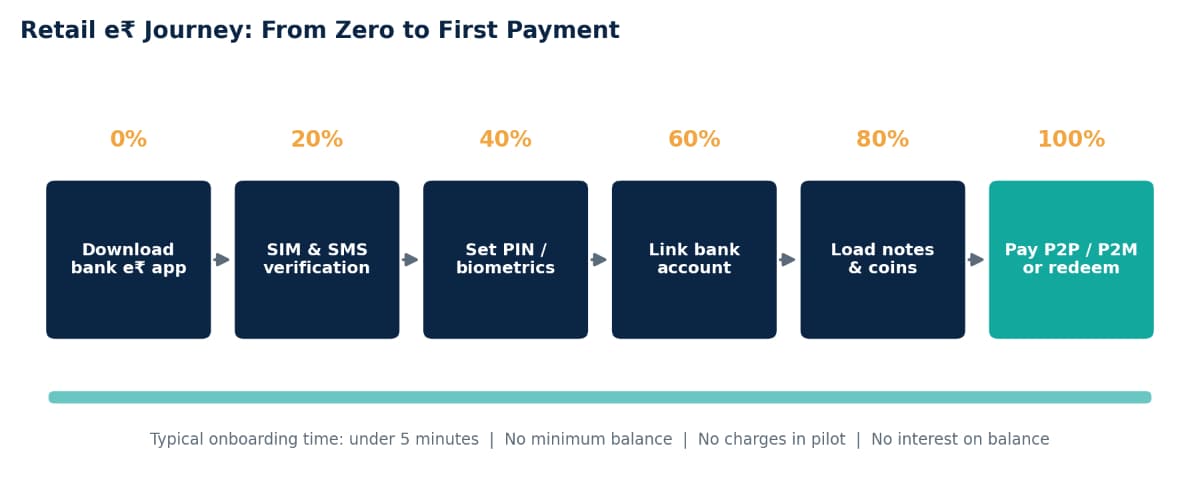
Figure 3: The retail e₹ onboarding journey, 0% to 100%
What you get: Claims on the central bank (RBI) directly, which can't disappear if your bank fails, a cleaner passbook, and immediate finality in payments (no clearing intermediary). Also, there are new features such as offline payments and programmable e₹, which are already used to make payments to 88,000 beneficiaries of the Subhadra Yojana in Odisha.
Wholesale e₹ (e₹-W) is restricted to scheduled commercial banks, primary dealers and eligible institutions, which hold Primary CBDC Accounts directly with the RBI. Individuals cannot open such accounts. The pilot began with 9 banks (including SBI, HDFC Bank, ICICI Bank, and HSBC) and has since broadened. It covers 4 use cases: G-Secs (secondary market), inter-bank call money, certificates of deposits and corporate bonds.
6. Allocation: A bank locks fiat in its RBI current account and receives an equivalent amount of e₹-W tokens.
7. Smart contract trigger: If Bank A purchases ₹50 crore of G-Secs from Bank B, a smart contract executes the trade.
8. Atomic settlement: Simultaneously, the bonds move from Bank B to Bank A and the e₹-W moves from Bank A to Bank B.
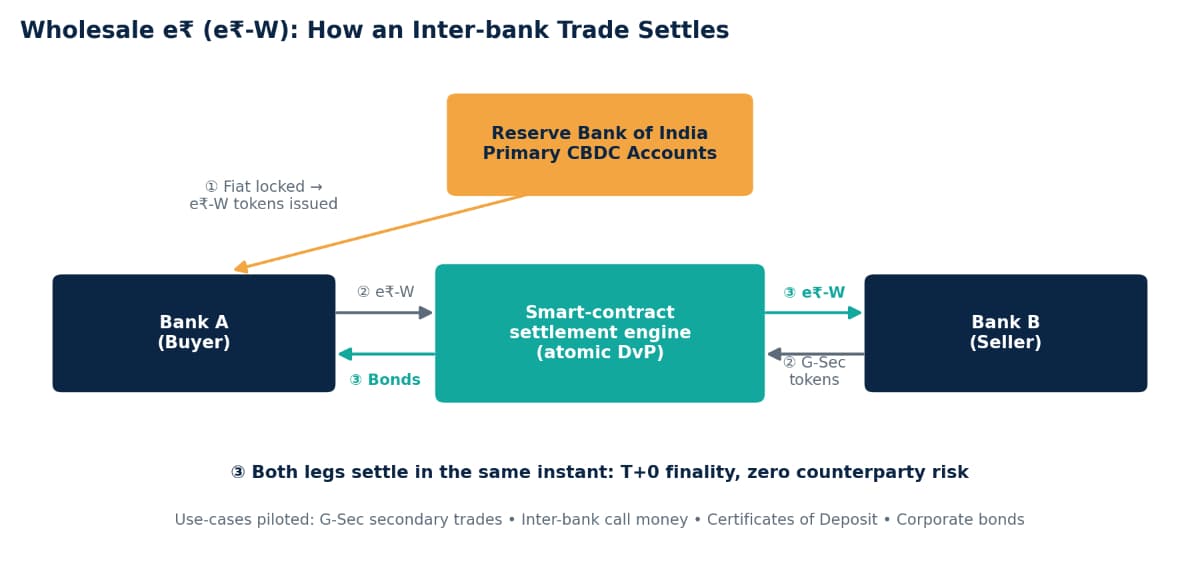
Figure 4: Atomic delivery-versus-payment (DvP) settlement in e₹-W
The e₹-W system offers a positive payoff: zero counterparty risk, T+0 settlement instead of T+1, reduced reliance on CCIL guarantees and collateral, and programmable payments that release only when contract conditions are met. RBI describes e₹-W as the natural settlement anchor for a tokenised market.
On 10 September 2026, at the Global Fintech Fest in Mumbai, the Governor of RBI, Sanjay Malhotra and the Chairman of SEBI, Tuhin Kanta Pandey launched Demat 2.0. Bonds are issued as native tokens on a permissioned DLT run by NSDL/CDSL, and legal ownership of the bonds is retained by the depositories. The cash leg is settled in e₹-W. The first phase of Demat 2.0 integrates with the existing Electronic Bidding Platforms (EBPs), with asset servicing on the ledger and no separate tokenised exchange. Secondary trading is planned next.
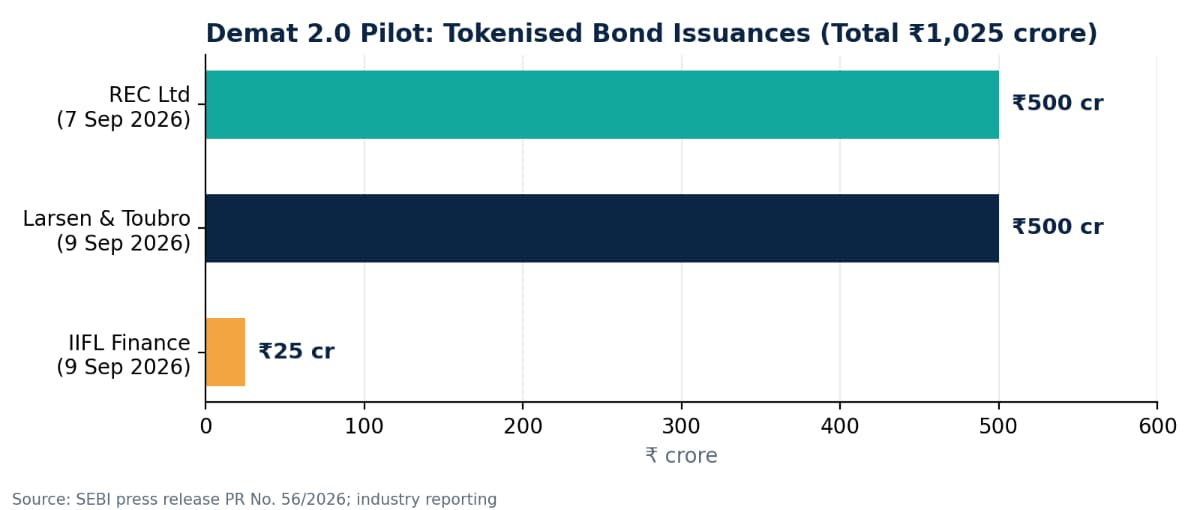
Figure 5: First tokenised bond issuances under Demat 2.0
Two ecosystem players work together. IBDIC, a consortium owned by 18 banks such as SBI, HDFC Bank, ICICI Bank, and the Bank of Baroda, standardises the cash-leg connectivity and data formats to enable member banks to do dual-wallet DvP uniformly. Blocsys Technologies, on the other hand, creates the middleware and smart contracts that automate coupons, TDS deductions, and redemptions into investors' e₹ wallets, as well as builds compliance layers for SEBI's sandbox.
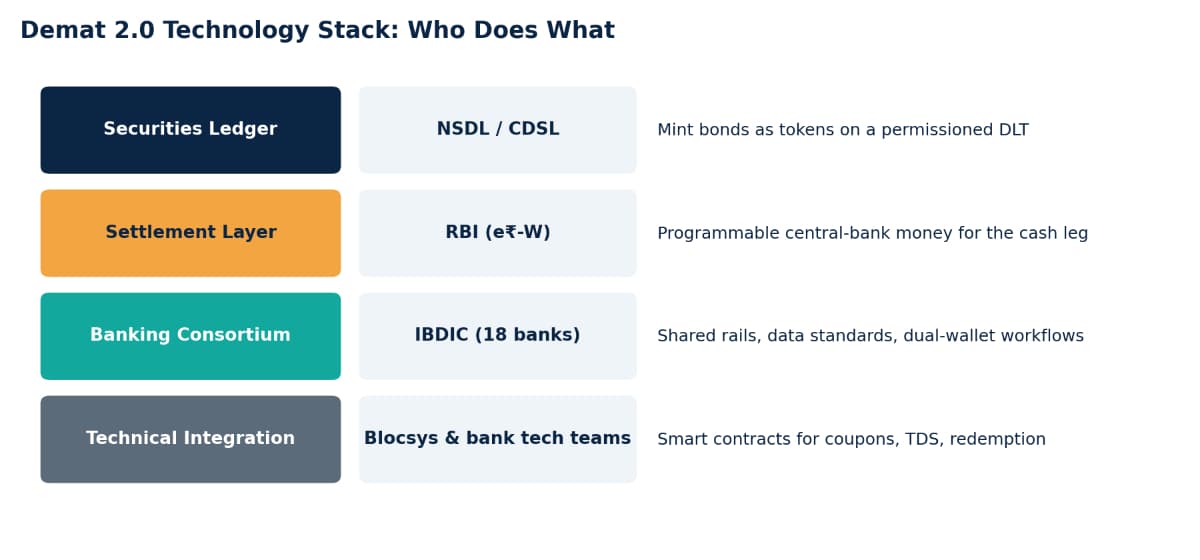
Figure 6: Demat 2.0 technology architecture
Table 3: Retail vs Wholesale Digital Rupee
| Feature | Retail e₹ (e₹-R) | Wholesale e₹ (e₹-W) |
|---|---|---|
| Target user | Citizens and merchants | Banks and institutions |
| Access point | Bank CBDC mobile apps | Primary CBDC Accounts with RBI |
| Transaction type | P2P / P2M via UPI QR | Bonds, call money, CDs |
| Core value | Safety and privacy | Speed and zero settlement risk |
For 2026-27, the RBI plans cross-border CBDC pilots, more DBT and business use cases, and a dedicated CBDC and Asset Tokenisation sandbox. Officials have hinted that gold could be the next asset to be tokenised.
UPI already provides a cash-like experience, so why switch? Programmable money raises a few questions regarding privacy and control. There are still challenges to prove true interoperability of banks and ledgers. The retail e₹ is a safe, cash-like wallet worth trying. In the long run, the focus should be on the wholesale e₹. Keep a close eye on Demat 2.0’s move into secondary trading, as that could potentially change how secondary markets are operated in India.
Sources: RBI Digital Rupee (e₹) FAQ; Business Standard (RBI Annual Report 2025-26, cross-border CBDC pilots); Finance Outlook India (e-Rupee circulation); SEBI press release on the Demat 2.0 launch (September 2026); Blocsys (Demat 2.0, tokenisation and CBDC integration).
India Crypto Research operates independently. The information presented herein is intended solely for educational and informational purposes and should not be construed as financial advice. Before making any financial decisions, it's essential to undertake your own thorough research and analysis. If you're uncertain about any financial matters, we strongly recommend seeking guidance from an impartial financial advisor.