
1. How It Started (2021)
2. Current Status (September 2026)
3. What Bitcoin Mining Actually Means
4. El Salvador's Geothermal Bitcoin Mining
5. How El Salvador Started With Bitcoin (The Legal Framework)
6. Government Mining Project: Tecapa
7. Chivo Digital Wallet
8. Government Bitcoin Reserves
9. Can Foreign Persons Invest in El Salvador's Bitcoin Ecosystem?
10. Taxation Summary (2026)
FAQs

Key Facts
| Official Name | Republic of El Salvador |
| Capital | San Salvador |
| Borders | Guatemala (west/northwest), Honduras (north/east), Pacific Ocean (south) |
| Size | Smallest country in Central America |
| Population | Approximately 6.40 million people |
| Legal Tender Status | US dollar (primary) and Bitcoin (adopted 2021; acceptance voluntary since 2025) |
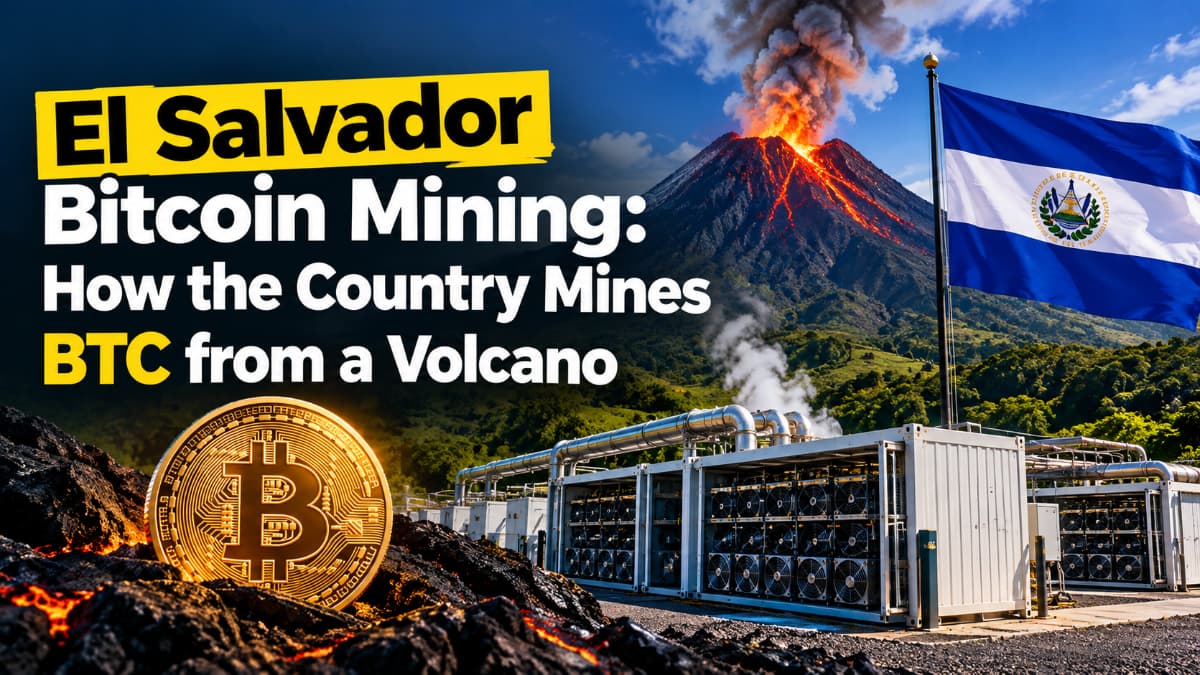
In 2021, El Salvador made Bitcoin legal tender and opened the door to state-sponsored Bitcoin mining, using the country's geothermal energy potential. Five years later, the state-run mining operation is still running. Since March 2024, El Salvador's government has added an average of 1 bitcoin to its wallet each day, giving the country a bitcoin trove of 7,785 BTC, the fifth-largest government-owned stash of Bitcoin.
Things have changed. In 2025, El Salvador agreed with the International Monetary Fund (IMF). As part of the agreement, El Salvador agreed to stop using public funds for Bitcoin purchases, change its laws to make Bitcoin acceptance voluntary, and hand majority control of the Chivo wallet to a private operator.
September 2021 marks the beginning of El Salvador's Bitcoin experiment. Despite critics of his Bitcoin Law, Salvadoran President Nayib Bukele made Bitcoin legal tender alongside the US dollar.
Bukele's next move was to announce that he was going to mine Bitcoin using the country's volcanic geothermal energy. By the end of October 2021, Bukele's government opened its first Bitcoin mining hub.
The IMF arrived next. In early 2025, El Salvador signed on to a $1.4 billion IMF loan facility. In order to access the facility, the IMF required the government to amend the laws to stop using public funds to purchase Bitcoin and hand majority control of the Chivo wallet to a private operator. The IMF has stated that no public funds have been spent to purchase Bitcoin since June 2025. So, who is supplying the Bitcoin? Per the IMF's report, the supply is from private donations and consolidation of government Bitcoin wallets.
Bitcoin mining is the process through which specialised computers, called ASIC miners, compete to add blocks to the Bitcoin blockchain. This process requires five things: high-speed internet, ASIC mining hardware, cooling, a mining pool, and lastly, access to cheap, abundant energy.
Energy > everything else. Low energy cost and high availability counter the high energy consumption of the mining hardware. El Salvador is pursuing a policy to promote Bitcoin mining using the energy generated by its volcanoes.
In 2021, President Bukele announced that the country would use its volcanic geothermal energy to mine Bitcoin. At the time, CoinDesk published an article regarding this initiative.
The Comisión Ejecutiva Hidroeléctrica del Río Lempa (CEL) and its affiliate LaGeo are the two main entities involved in the project.
Also, a critical aspect to understand is that Bitcoin is not literally extracted from a volcano. Geothermal energy is heat that is deep within the Earth, and it is converted to electricity to power Bitcoin mining facilities.
The complete process is as follows: Geothermal energy → hot steam or fluids → turbine → electricity → Bitcoin mining facilities.
Bitcoin mining facilities contain specialised computers called Application-Specific Integrated Circuits (ASICs) that are used for Bitcoin mining. The ASIC computers connect to a Bitcoin mining pool. Miners that are part of the pool receive a reward in Bitcoin. The reward is transferred to a government-controlled Bitcoin wallet.
Step-by-step process of Bitcoin mining
| Step | What happens |
|---|---|
| 1. Energy Generation | Geothermal wells access underground heat linked to volcanic activity; hot water or steam is brought to the surface to drive turbines. |
| 2. Electricity Allocation | A portion of the generated electricity is diverted to the mining infrastructure via transformers and power-management systems. |
| 3. Hardware Deployment | Specialised ASIC machines perform SHA-256 calculations continuously and require active ventilation and cooling. |
| 4. Network Connection | Machines connect to a mining pool, contributing hash rate instead of mining independently. |
| 5. Block Production | The pool's combined hash rate attempts to discover valid blocks; rewards are split by contribution. |
| 6. Bitcoin Custody | Mined Bitcoin is transferred to a government-controlled wallet. |
| 7. Accounting & Reporting | Mined value is tracked against electricity cost, hardware depreciation, network difficulty, and BTC price to assess viability. |
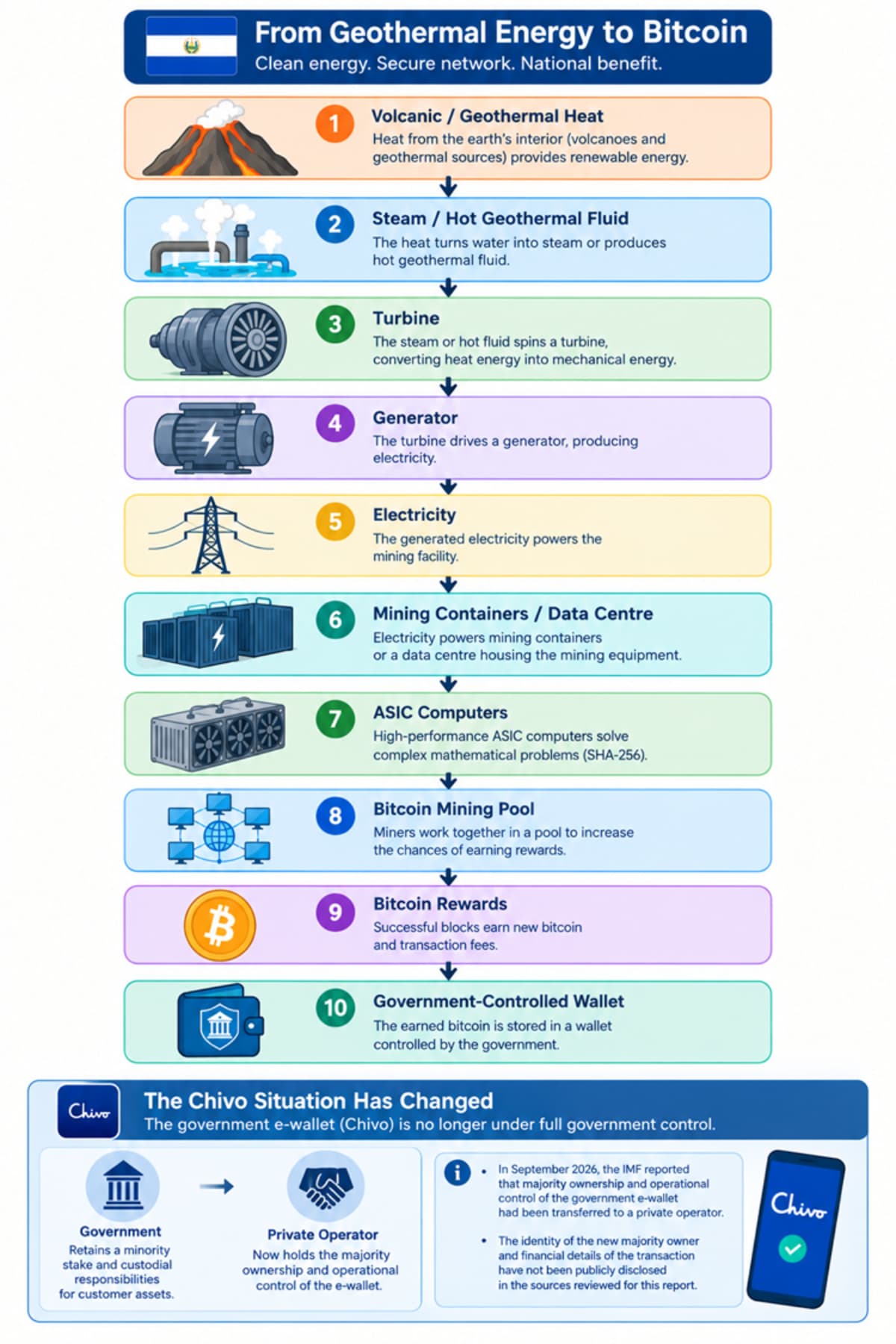
Figure 1: From geothermal heat to a government-controlled Bitcoin wallet, and how the Chivo wallet's ownership has changed.
The incorporation of Bitcoin in El Salvador was made legal through the adoption of a series of laws. The first of which was enacted in 2021 and gave Bitcoin legal tender status.
The government built a Bitcoin infrastructure that enabled residents to transact in Bitcoin. The government digital wallet, Chivo, was built to facilitate dollar and Bitcoin transactions. Financial inclusivity for the unbanked and underbanked residents was the core objective of the policy.
In 2025, legislation was passed to allow Salvadoran businesses to refuse Bitcoin payments. Additionally, automatic conversions of Bitcoin to dollars by the government were abolished, and taxes became payable only in US dollars. The legislation of 2025 also kept the capital gains tax exemption for Bitcoin.
The policy modifications in 2025 scaled back much of the 2021 model.
As of now, the Tecapa geothermal plant can produce about 102 MW of energy. Currently, 1.5 MW is directed to Bitcoin mining, powering about 300 processors.
How much Bitcoin has the plant produced? Reported figures show that about 473.5 BTC were mined from September 2021 to May 2024.
Since the Bitcoin is mined by the government and not purchased on a Bitcoin exchange, it is considered government-produced Bitcoin. Using a resource the country already has is a wise economic choice for a government.
The government created the Chivo digital wallet in 2021, enabling users to make transactions using Bitcoin or US dollars. The digital wallet was the basis of the first government-led Bitcoin strategy.
Later on, majority ownership and operational control of Chivo moved to a private operator. The government kept a minority stake and responsibility for protecting customer assets.
According to data collected on 25 September 2026, the government of El Salvador held about 7,785 BTC. Based on this data, the government of El Salvador ranked fifth in Bitcoin holdings among governments. The Bitcoin holdings of public officials of Ukraine ranked fourth. Other countries that rank above El Salvador in terms of Bitcoin holdings are the USA, the UK, and China.
That is a big stash for the smallest country in Central America.
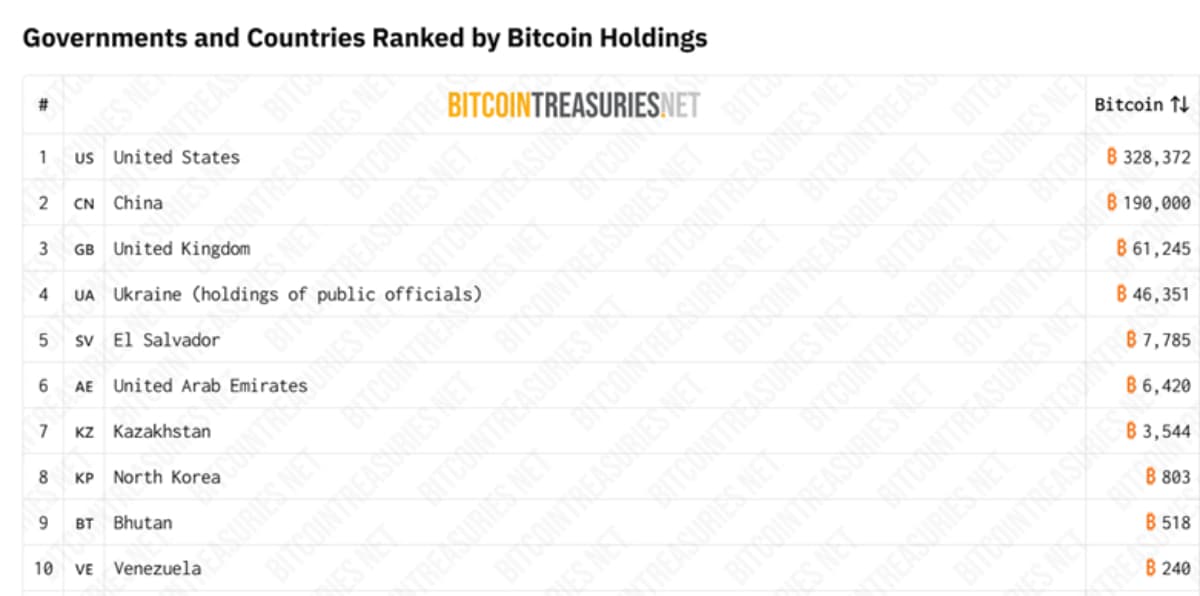
Source: BitcoinTreasuries.net
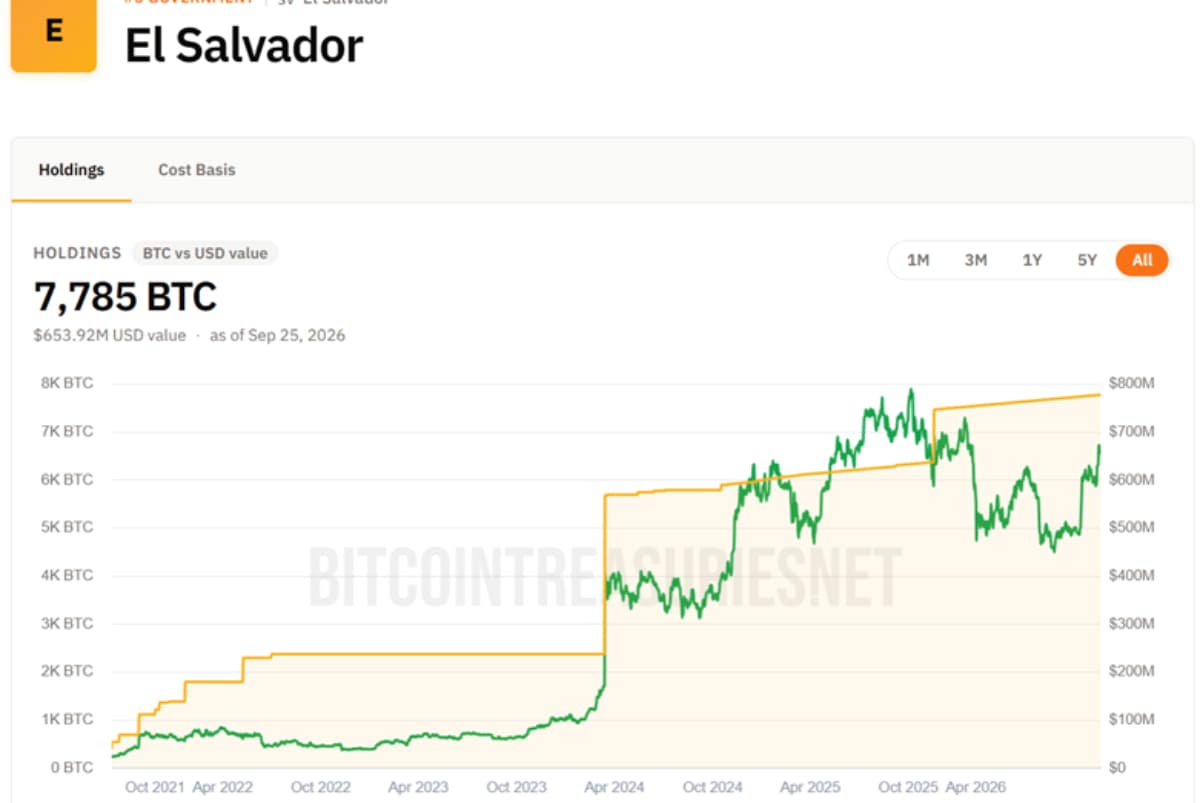
Figure 2–3: Governments ranked by Bitcoin holdings, and El Salvador's holdings growth (BTC vs. USD value) since 2021.
Yes, but it depends on what you want to invest in. There are three main options.
Investing in Bitcoin. Any individual can purchase Bitcoin through an exchange, and after that, it is up to the investor to secure the Bitcoin. Keep in mind, this type of investment is not the same as investing in El Salvador's Bitcoin mining industry.
Investing in a Salvadoran Bitcoin Mining Company. This option depends on whether a company offers the investment opportunity, and if the individual passes the company's KYC and AML checks. It is important that the individual analyses the company's articles of incorporation, and ensures the company is operating within the limits of the law.
Investing in a regulated Digital Asset. El Salvador's National Commission of Digital Assets (CNAD) has the power to regulate and give licences to Digital Asset Service Providers and Issuers. Investors can find more information on the CNAD's website.
The Bitcoin Law does not make every Bitcoin business or investor tax-free. Foreign investors need to assess the tax implications of investing in El Salvador.
Under the Bitcoin Law, there is no capital gains tax on gains from exchanging Bitcoin. However, Bitcoin mining operations are still subject to ordinary corporate or income tax, and foreigners may still owe taxes in their home country. Before investing in El Salvador, evaluate the taxes you will owe in El Salvador and your home country.
| Category | Tax treatment |
|---|---|
| Resident individuals | Progressive income tax; income up to US$6,600 is exempt, with 10%, 20%, and 30% brackets above that. |
| Non-domiciled individuals | Generally taxed at a flat 30% rate on Salvadoran-source income. |
| Companies (standard) | 30% corporate income tax rate. |
| Companies (reduced rate) | 25% rate for companies with taxable income of US$150,000 or less. |
| Gains from exchanging Bitcoin | Not subject to capital gains tax under the Bitcoin Law. |
| Bitcoin-mining/business income | Still subject to ordinary corporate or income tax; the capital gains exemption does not make it tax-free. |
| Government tax payments | Made and accepted only in US dollars. |
Sources: Wikipedia (El Salvador country profile), CoinDesk (El Salvador geothermal Bitcoin mining), BitcoinTreasuries.net (government Bitcoin holdings, data as of 25 September 2026), IMF programme reviews (2026), government figures on Tecapa mining output (2024).
India Crypto Research operates independently. The information presented herein is intended solely for educational and informational purposes and should not be construed as financial advice. Before making any financial decisions, it's essential to undertake your own thorough research and analysis. If you're uncertain about any financial matters, we strongly recommend seeking guidance from an impartial financial advisor.


